AI Amplifies the Delivery System: Why Faster AI Cannot Fix Weak Execution
AI accelerates individual tasks. Yet without clear outcomes, limited WIP, quality controls and fast feedback loops, it merely shifts the constraint.
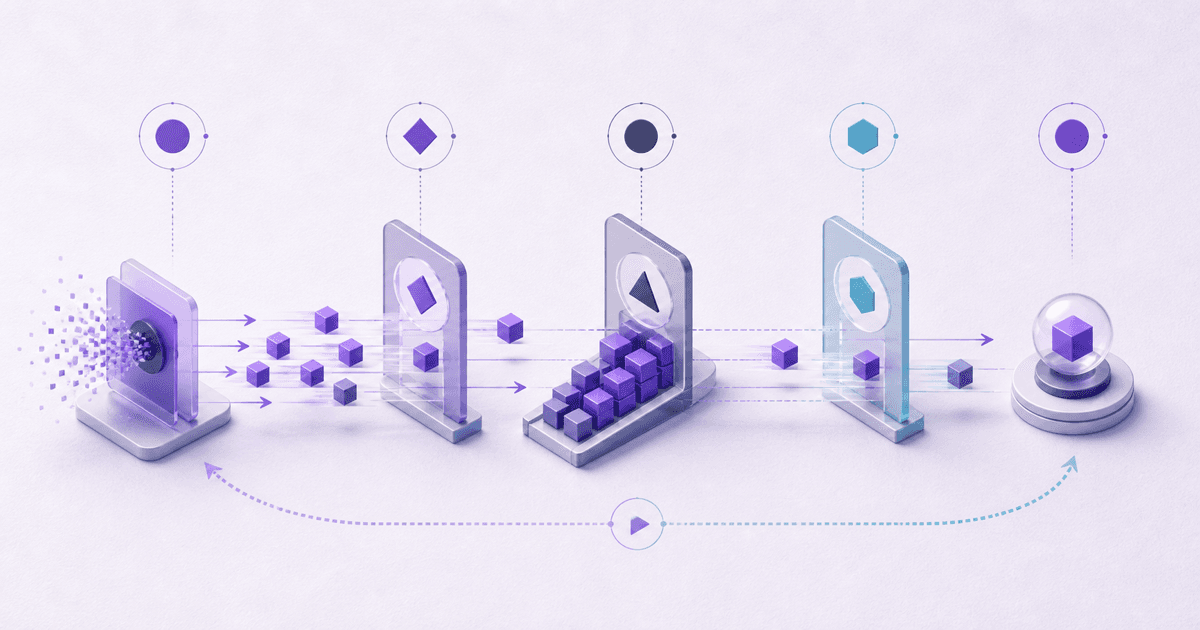
Under certain circumstances, AI can shorten the lead time of an individual task. It can, for example, suggest code, prepare test cases, structure requirements, generate documentation, create presentations and much more. That is useful. However, because tasks can be completed faster, it may shift waiting time to another level. To understand this, we need to look more closely at delivery.
Delivery does not happen at a single desk. It emerges from a system of decisions, dependencies, queues, quality controls, platforms, data and feedback. If only one part of that system becomes faster, the constraint moves. More output reaches the next stage earlier, where it then waits for review, testing, security, deployment or a business decision.
When using AI, the focus should therefore be on understanding how AI changes the flow from an idea to verifiable customer value, and where new bottlenecks emerge that may slow end-to-end lead time despite faster execution.
The system thesis: AI is an amplifier
The 2025 DORA report describes AI as an amplifier of existing strengths and weaknesses. This matters because it moves the discussion from the tool to the system of work. An organisation with clear goals, small batches, quality mechanisms, effective internal platforms and short feedback loops can translate additional speed into high-quality, valuable results. Where priorities are unclear, hand-offs are slow or quality controls are fragile, the additional delivery speed makes other problems much more visible and urgent.
DORA reports a research base of more than 100 hours of qualitative data and survey responses from nearly 5,000 technology professionals. The published findings describe statistical relationships, models and qualitative patterns. They do not prove that every organisation will experience the same effect or that one intervention alone causes a particular outcome.
This boundary is useful in practice because it prevents two automatic but incorrect conclusions: neither “AI automatically increases productivity” nor “AI automatically makes delivery unstable” follows from the evidence.
A local task gain is not yet end-to-end value
A local gain is easy to see. A draft takes an hour rather than a day. A code change is produced more quickly. An analysis covers more options. These can be real observations when measured in the organisation’s own context. They do not yet mean that customers receive value sooner.
At least four checks sit between local output and value:
Is the work right? Does it address a relevant customer or business problem?
Can it be integrated? Does it fit the architecture, data, processes and other changes in progress?
Can it be operated safely? Does it pass testing, security, compliance and deployment?
Do we learn from use? Can we see whether the expected outcome occurs after release?
If one of these checks is slow or ambiguous, AI first accelerates arrival at that constraint. The system does not automatically deliver faster; it creates more work at those constraints sooner.
More output can increase WIP and queues
The simplest systems mistake is to treat AI output as additional capacity. If teams start more work without increasing their ability to finish it, work in progress grows. More changes then compete for the same reviews, test environments, business decisions and releases.
This appears as more than a longer visible backlog. Typical signals include:
pull requests or business drafts ageing before anyone reviews them;
blocked work being replaced with new work in parallel;
dependencies being discovered later because more batches move at the same time;
context switching increasing even though individual tasks start faster;
decisions accumulating around a small number of roles or forums;
completed fragments waiting for a shared release or data approval.
A local time saving can therefore reappear as additional waiting time in the overall system. This is not to say that AI is bad. It shows that using AI must also account for changes to workflows, organisational responsibilities and related operating conditions.
Before a team starts more AI-assisted work, it should make visible how much work is already in the system, how old it is and what it is waiting for. WIP limits, explicit pull rules and smaller batches do not limit ambition. They protect the ability to finish work and learn from it.
Testing, security and deployment become part of the constraint
AI can accelerate implementation. It can also create more variants, dependencies and changes that need assessment. If test automation is unreliable, security checks happen late or deployments are infrequent and risky, faster creation produces a control queue downstream.
Those safety nets include:
small, traceable changes rather than large AI-generated batches;
version control for code, configuration and relevant prompts;
fast and reliable automated tests;
clear accountability for review and approval;
reproducible security and compliance checks;
a deployment pipeline that can release and reverse small changes safely;
visible rework rather than a simple count of generated artefacts.
The right measure is therefore not “lines of code generated” or “AI tasks completed”. More meaningful evidence connects lead time with quality and stability signals, rework and actual use.
Platforms and the operating model determine whether speed scales
The operating model determines who sets priorities, who accepts risk, who decides on exceptions and how teams collaborate across boundaries. Without that clarity, AI does not reduce coordination. It produces more cases in which coordination is required.
Three questions make this connection concrete:
Is there a safe standard path from a small change to production?
Can teams obtain the necessary data, environments and decisions without long ticket chains?
Are accountability and escalation located where the work actually happens?
If the answer is repeatedly no, the next leverage point is probably not another AI tool. It is more likely to be the platform, decision rights or the flow of work.
Without feedback, assumptions merely move faster
AI lowers the cost of generating ideas and variants. This increases the importance of feedback so that we can understand whether we are moving in the right direction. If a team builds faster but validates less often with users, it mainly accelerates its assumptions.
Useful feedback connects three levels:
Technical feedback: Can the change be integrated, tested, secured and operated?
Flow feedback: Where does work wait, where is rework created and which dependency prevents completion?
Outcome feedback: Does the relevant behaviour, use or business problem move in the intended direction?
These levels cannot be traded against one another. A stable system without customer value is not successful. A positive user test that depends on permanent manual risk does not scale either. High throughput with increasing rework merely consumes capacity faster.
Measure in balance: speed, stability, value and the ability to work
A single productivity measure is too simplistic for AI-assisted delivery. It should consider business impact, delivery, end-user satisfaction and product quality, among other dimensions.
A small, decision-oriented measurement view can include:
Value: a clear customer or business outcome and the corresponding use signal;
Flow: lead time, the age of work in progress, WIP, blocked time and queue time;
Quality and stability: failed changes, recovery time, escaped defects and rework;
Platform and governance: success rates for critical paths, time to useful feedback and documented exceptions;
Ability to work: perceived friction, overload, clarity and the team’s learning capability.
Not every organisation needs every measure permanently. The crucial point is to connect each measure to a decision. If a signal deteriorates, it should be clear who adjusts the use case, reduces WIP, prioritises a platform constraint or stops the AI application.
The AI Delivery System Check
The following check is a TheRevolutionaryMind synthesis. It is not a DORA-validated diagnostic instrument. It combines external DORA evidence with internal practices from flow, operating-model and strategy work.
Lens | Diagnostic question | Observable evidence | Next decision |
|---|---|---|---|
1. Outcome and value | Which verifiable customer or business outcome should the AI use case improve? | Baseline, use signal, explicit assumption and named quality boundary | Continue, narrow or stop the use case |
2. Flow, WIP and queues | Does work finish sooner, or does it merely reach the next constraint faster? | WIP, age of work, blocked time, queue before review/testing/decision and end-to-end lead time | Limit WIP, reduce batch size or prioritise capacity at the constraint |
3. Quality, stability and rework | Which additional assessment and repair work is created by greater change velocity? | Test signal, failed changes, recovery time, defects and proportion of rework | Strengthen the safety net, change the boundary of use or reduce automation |
4. Platform, data and governance | Can teams move AI-assisted changes through the system safely, reproducibly and with appropriate data? | Self-service path, data quality, version binding, policy clarity, traceable approvals and exceptions | Improve the platform path, clarify data ownership or move decision rights |
5. Feedback, learning and capabilities | Do teams receive feedback quickly enough to change behaviour and the system? | User feedback, experiment decisions, review cadence, perceived friction and capability gaps | Shorten the learning loop, build a capability or reject the hypothesis |
The check is not intended to produce a maturity score. Its result is a prioritised decision: which single system constraint needs to change next so that local AI speed can be translated into dependable value?
Practical consequence: make the system visible before accelerating it
A pragmatic start with AI does not require a large transformation programme, but it does require an incremental approach and agile ways of working:
Select one concrete AI-assisted path from idea to use.
Define the intended outcome and one quality boundary.
Visualise every stage, queue and decision right.
For several weeks, measure end-to-end flow, rework and feedback rather than local handling time alone.
Then decide whether the AI tool, the workflow, the platform or the operating model is the next leverage point.
This keeps AI as a means of improvement. It does not become a substitute for prioritisation, systems design or leadership.
How this differs from existing articles
This article complements three published perspectives:
Governing AI Pilots explains criteria, human checkpoints and decisions before adapting or scaling a specific pilot.
Understanding Kanban Metrics explores measures for the flow of work.
What is Outcome Based Management? focuses on managing through intended impact rather than activity.
The new perspective connects these levels at a particular moment: AI increases local production speed while the delivery system as a whole remains unchanged.
Conclusion
AI does not fix unclear prioritisation, an overloaded review stage or an inadequate deployment pipeline. It can amplify those weaknesses because it feeds more work into the existing system more quickly.
The useful next step is therefore not automatically more automation. It is a rigorous view of outcome, flow, quality, platform and feedback. Only when these levels work together does local speed become better delivery.
If you want to examine where AI creates value in your delivery system and where it merely fills the next constraint, our consulting for strategy and organisation provides a practical framework for diagnosis, prioritisation and implementation.
Sources
DORA: State of AI-assisted Software Development 2025, accessed 25 August 2026.
DORA: DORA AI Capabilities Model, last updated 25 November 2025.
DORA: AI Capabilities Model questions, accessed 25 August 2026.
DORA: 2025 research questions, last updated 22 September 2025.
DORA: Platform engineering capability, last updated 12 January 2026.
Google Cloud DORA: Announcing the 2025 DORA Report, 23 September 2025.
DORA: Balancing AI tensions: Moving from AI adoption to effective SDLC use, 10 March 2026.
Eurostat: Digitalisation in Europe – 2026 edition, accessed 25 August 2026.
Evidence boundary: DORA primarily studies technology-related work and publishes relationships, models and recommendations. The findings are not universal causal proof. Eurostat’s figures demonstrate business adoption of AI, not delivery performance, productivity or value impact.